
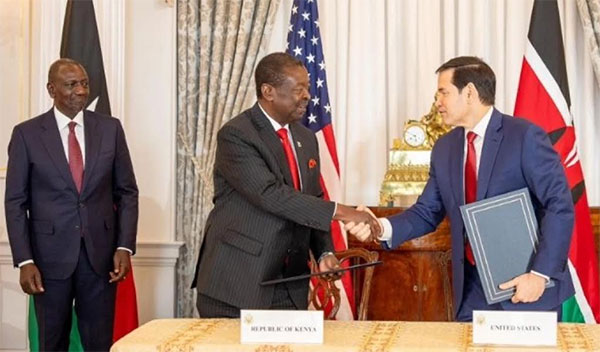
US Africa health data agreements have sparked strong debate across the continent as governments question the fairness of new health partnerships with Washington. These deals promise billions of dollars to strengthen disease control systems. However, they also require extensive access to sensitive national health data. Many African leaders now worry that such terms could weaken data sovereignty and deepen global health inequality.
Zimbabwe recently withdrew from a proposed $367 million United States health funding programme. Officials rejected provisions that required broad sharing of national health intelligence. The five-year initiative aimed to support programmes targeting HIV/AIDS, tuberculosis, malaria, and epidemic preparedness. Despite the promised funding, Harare concluded that the conditions attached to the deal created an unfair arrangement.
Authorities objected to requirements that demanded wide access to epidemiological surveillance data and pathogen samples. Zimbabwe argued that the proposal created an “unequal exchange.” The country feared it would supply the raw materials for scientific discovery without clear guarantees of receiving medical benefits in return.
Critics describe this model as biomedical extractivism. The concept refers to extracting biological resources from developing countries while wealthier nations capture most of the benefits. In many cases, pharmaceutical firms and research institutions in the Global North turn pathogen data into patents, vaccines, and profitable treatments.
Zimbabwe is not the only country raising concerns about US Africa health data agreements. Zambia currently faces similar questions about a proposed health partnership with the United States valued at more than $1 billion over five years. The draft arrangement requires Zambia to contribute about $340 million in domestic financing. At the same time, it grants Washington broad access to national health data and pathogen samples.
One controversial clause has intensified the debate. The agreement reportedly allows termination if Zambia fails to conclude a separate minerals compact with the United States. That proposed compact would cover strategic resources such as copper and cobalt. Civil society groups warn that linking health cooperation with mineral policy could increase economic pressure on the country.
Kenya also raised legal concerns about similar health arrangements. Last December, the High Court suspended a $2.5 billion health agreement after activists filed a legal challenge. Petitioners argued that the agreement could expose sensitive health data without adequate protections under Kenya’s Data Protection Act. The court’s decision highlighted the importance of legal oversight in international health cooperation.
These cases reveal a wider pattern across the continent. Washington has negotiated a growing network of bilateral health partnerships with African governments under its “America First Global Health Strategy.” These agreements aim to improve disease surveillance, laboratory capacity, and pandemic preparedness.
Policy analysts report that the United States has already signed more than twenty memoranda of understanding with African countries. Implementation timelines extend from 2026 to 2030. Total commitments under these agreements approach $20 billion. However, many African governments must finance a large portion of the programmes themselves.
Supporters argue that these partnerships strengthen critical health systems. They provide funding for programmes that combat HIV/AIDS, tuberculosis, Ebola, and malaria. They also improve laboratory infrastructure and outbreak monitoring.
However, critics say US Africa health data agreements shift bargaining power heavily toward Washington. The main issue involves access to health data and pathogen samples. In the modern biotechnology sector, this information has immense economic value.
Health systems generate laboratory records, genomic sequences, and outbreak surveillance data. Researchers use these resources to develop vaccines, diagnostics, and treatments. Biotechnology companies then turn those innovations into intellectual property and commercial products.
As a result, biological information has become a strategic resource. Some analysts compare its value to oil, minerals, or rare earth elements. African health systems may therefore become upstream suppliers of valuable biological data. Meanwhile, wealthier countries capture most of the economic benefits.
Historical experience also shapes African scepticism toward foreign medical research. During the colonial period, medical campaigns often combined disease control with coercive governance. Authorities sometimes forced communities to participate in medical programmes.
One notorious example occurred during sleeping sickness control campaigns in French Equatorial Africa between 1921 and 1956. Colonial administrators gathered entire villages for mandatory medical inspections. Doctors injected many people with experimental treatments that lacked proper safety testing. Some drugs later caused severe blindness and other serious health complications.
Modern controversies have also influenced public opinion. In 1996, during a meningitis outbreak in northern Nigeria, the pharmaceutical company Pfizer tested an experimental antibiotic called Trovan on children. Investigators later concluded that the trial lacked proper regulatory approval. Nigerian authorities described the experiment as illegal. The company later reached a $75 million settlement with Kano State while continuing to deny wrongdoing.
These events strengthened calls for stronger global health ethics. Scholars argue that international medical research must involve genuine partnerships with local researchers and policymakers. Ethical frameworks also require fair distribution of the benefits produced by scientific research.
The COVID-19 pandemic reinforced these concerns. Scientists worldwide shared viral samples and genomic data quickly. That cooperation allowed researchers to develop vaccines at unprecedented speed. However, vaccine distribution exposed deep global inequality.
Many African countries struggled to secure early vaccine supplies. Wealthy nations accumulated large stockpiles while lower-income countries waited. This experience intensified debates about fairness in global health governance.
In response, the World Health Organization adopted the Pandemic Agreement in 2025. The framework proposes a pathogen access and benefit-sharing system. Countries that share biological data should receive fair access to vaccines and medical technologies developed from those resources.
Yet bilateral US Africa health data agreements could weaken those global mechanisms. Powerful states may secure privileged access to pathogen data through direct negotiations with individual countries. Such arrangements risk bypassing broader multilateral systems designed to ensure fairness.
African governments now face a complex balancing act. They need international cooperation to strengthen public health systems. At the same time, they must protect data sovereignty, legal oversight, and national interests.
Many experts believe regional cooperation could offer a solution. Institutions such as the African Union and the Africa Centres for Disease Control and Prevention could coordinate collective negotiations with global partners. Acting together would improve Africa’s bargaining power and ensure more balanced agreements.
The debate over US Africa health data agreements ultimately reflects a deeper issue. As biotechnology grows, biological data will become one of the most valuable scientific resources in the world. Countries that supply this data must also share fairly in the resulting benefits.
African leaders now face a critical decision. They must protect vital health programmes while defending sovereignty and fairness. The future of global health cooperation may depend on achieving that balance.

