
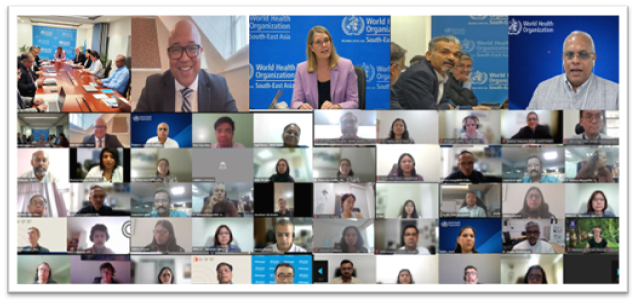
WHO SEARHEF Fund is gaining renewed attention as global health leaders seek stronger financing mechanisms to manage rising health emergencies in South-East Asia. The World Health Organization Health Emergencies Programme recently convened international partners to discuss updated rules governing the regional emergency fund and explore ways to mobilize broader support.
The virtual meeting, held on 10 March 2026, brought together development partners, diplomatic missions and multilateral institutions. Participants reviewed the updated policy framework and business rules of the WHO SEARHEF Fund, which officially took effect on 1 January 2026. The session created a platform for dialogue on how flexible financing can improve emergency preparedness and response across the region.
Dr Catharina Boehme, Officer-in-Charge of the WHO Regional Office for South-East Asia, opened the consultation by emphasizing the growing complexity of public health crises. She noted that outbreaks, climate-driven disasters and humanitarian emergencies are occurring more frequently. According to Boehme, predictable funding plays a critical role in enabling fast and coordinated responses when emergencies arise.
Dr Chikwe Ihekweazu, Deputy Executive Director of the WHO Health Emergencies Programme in Geneva, reinforced the importance of global cooperation. He stressed that strengthening regional preparedness requires both international financing and strong partnerships. The updated WHO SEARHEF Fund framework aims to ensure countries have access to immediate operational support during health crises.
During the meeting, WHO officials explained the new governance arrangements and operational guidelines for the fund. The revised framework clarifies eligibility criteria and outlines how resources will support emergency operations across the region. Officials also highlighted how the WHO SEARHEF Fund complements global financing systems while remaining focused on rapid regional action.
One key change in the updated policy involves expanding the sources of funding. The fund now accepts voluntary contributions from development partners, donor governments, philanthropic foundations and private sector organizations. This broader partnership model aims to strengthen sustainable financing for emergency preparedness.
The expansion comes at a time when global health financing faces increasing pressure. Many countries continue to recover from recent pandemics while confronting new disease threats and climate-related health risks. By opening the WHO SEARHEF Fund to wider collaboration, WHO hopes to attract diverse funding streams that can support rapid response operations.
Participants in the consultation widely acknowledged the importance of collective action. Health emergencies often require immediate resources to protect vulnerable populations and contain outbreaks. Without flexible financing mechanisms, response efforts can face delays that increase both human and economic costs.
The meeting concluded with a shared commitment among partners to strengthen regional health security. Officials emphasized that strong partnerships, reliable funding and coordinated action remain essential for protecting communities from future health crises. Through the strengthened WHO SEARHEF Fund, WHO and its partners aim to ensure countries in South-East Asia can respond quickly and effectively when emergencies occur.

