
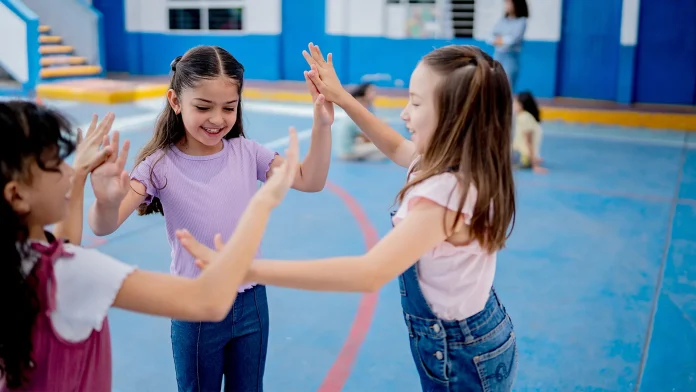
Childhood exercise benefits are gaining renewed attention as scientists warn that children around the world are becoming less physically active than previous generations.
Researchers say reduced movement during childhood could have long-term consequences for physical health, mental wellbeing, and cognitive development. The decline in activity comes at a time when global obesity rates among children and adolescents continue to rise.
According to health experts, increased screen time, sedentary lifestyles, stress, lower sports participation, and poor-quality diets have all contributed to the trend. The World Health Organization recommends that children engage in at least 60 minutes of physical activity each day, yet many fail to meet that target.
Scientists now believe that encouraging movement early in life may produce lifelong benefits, improving both physical and cognitive health well into adulthood.
Childhood exercise benefits extend into adulthood
Several long-term studies suggest that physically active children are more likely to remain active later in life. Researchers also say early participation in sports and regular exercise may help reduce future health risks.
One major longitudinal study that followed 712 World War Two veterans for 50 years found that participation in high school sports strongly predicted better health outcomes at age 70. Those individuals also remained more physically active and made fewer visits to doctors compared to non-participants.
Other studies have linked childhood exercise benefits to lower body mass index, smaller waist circumference, improved educational performance, and stronger mental health outcomes.
Experts say physical activity strengthens the cardiovascular system while also supporting brain development during critical growth years.
Read Also
Birth Position Explained: Why Women Give Birth Lying Down
Nicole Logan, an assistant professor of kinesiology at the University of Rhode Island, says exercise improves body composition while helping maintain positive cognitive function throughout adolescence.
Researchers have found that aerobic fitness and physical activity improve concentration, reaction times, memory, and inhibitory control, which helps children resist impulsive reactions and focus better during learning tasks.
In one nine-month after-school intervention programme, Logan and colleagues observed that children with obesity who participated in regular moderate-to-vigorous exercise achieved better cognitive scores than those outside the programme.
The intervention also reduced body fat levels. Scientists say excess fat stored around vital organs can produce inflammation, which is associated with poorer cognitive performance.
Schools play a major role in movement
Many researchers now believe schools should become central to efforts aimed at increasing physical activity among children.
Logan proposes that schools implement at least 60 minutes of movement daily. Such a system could reduce pressure on parents, who often face financial and time barriers when trying to enrol children in organised sports programmes.
However, experts say movement does not always need to involve structured exercise or competitive sports.
One study conducted in Massachusetts found that simply increasing opportunities for movement before, during, and after school led to lower body mass index scores among elementary school children.
The programme also improved access to healthier food options, showing that lifestyle changes often work best when combined.
Read Also
Weight Loss Drugs Work Better With Certain Genes
Ulla Toft, a clinical professor at the University of Copenhagen, says reducing childhood obesity requires a broader focus on healthy environments, including physical activity, nutrition, sleep, and reduced screen time.
Researchers are also experimenting with ways to reduce sedentary behaviour inside classrooms.
In one UK study involving 30 schools, teachers encouraged students to stand while answering questions and move around more frequently during lessons. The intervention produced an 8% decline in waist-to-hip ratios among participants and a 10% increase in sports participation.
Lead researcher Flaminia Ronca from University College London said the programme focused less on exercise itself and more on reducing prolonged sitting.
Children spend much of the school day seated, making small movement-based interventions potentially important for long-term health.
Childhood exercise benefits improve confidence
Researchers say confidence and emotional wellbeing also influence whether children remain physically active.
Michaela James from Swansea University found that many children feel excluded by heavily structured sports activities, which can negatively affect confidence and participation levels.
She argues that giving children greater freedom to choose activities they enjoy may encourage more movement and stronger emotional development.
According to James, unstructured play such as climbing trees, running around playgrounds, and playing games can be just as valuable as organised sports.
Experts also recommend ensuring schools do not remove break times as punishment, since outdoor play often provides important movement opportunities.
Read Also
Isometric Exercise Benefits Transform Quick Workouts
Parental influence also remains critical. Studies show children are more likely to stay active when parents exercise regularly and participate in physical activities together.
Simple activities such as walking, jogging, cycling, or visiting parks can positively influence long-term exercise habits among children.
Researchers say adolescent girls especially benefit from encouragement and support from parents when participating in sports and physical activity.
In addition, creative playground designs using tyres, crates, pallets, and open spaces may help increase movement through free play and exploration.
Movement supports both body and mind
Scientists increasingly agree that all forms of movement matter. Whether children are participating in sports, running around outdoors, or engaging in active classroom behaviour, physical activity appears to support stronger health outcomes.
Read Also
Nature Health Benefits Improve Body and Mind Fast
Researchers say encouraging movement early in life could help reduce obesity risks, strengthen cognitive performance, and improve emotional wellbeing for future generations. As schools, parents, and communities search for solutions, experts believe creating more opportunities for children to move may be one of the most effective investments in long-term public health.

