
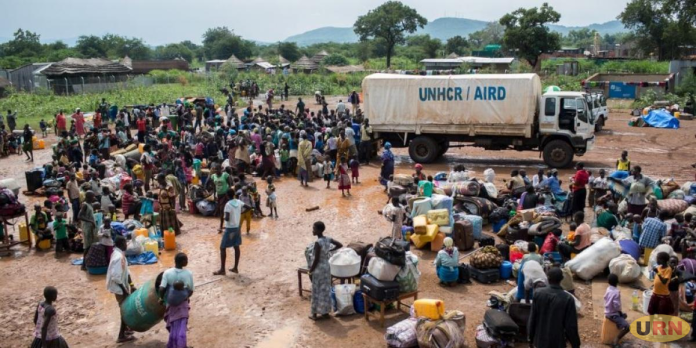
The Uganda refugee crisis has reached a critical point. Severe funding shortfalls have forced major aid groups to cut life-saving services. Now, more than one million refugees lack healthcare, food aid, and education. The International Rescue Committee (IRC) warns that these cuts are pushing Uganda’s refugee health system toward collapse.
Uganda hosts nearly two million refugees—more than any other African country. For years, it welcomed them with open policies: freedom to move, access to public services, and plots of land to farm. Donors once supported this model well. But since 2022, global needs have surged while funding has dropped sharply. As a result, health programs now face deep cuts or full shutdowns.
Because of this, over one million refugees who relied on the IRC for care now go without it. In 2025 alone, refugee settlements reported six disease outbreaks. Some areas also faced 30% shortages of essential medicines. Many clinics that served both refugees and local communities have scaled back or closed. This leaves large populations with no basic medical help—just when they need it most.
At the same time, acute malnutrition is rising fast. In Uganda’s 14 refugee-hosting districts, rates jumped from 5.4% to 7.8%. Thousands of children now risk illness, developmental harm, or death. New arrivals keep coming from South Sudan and the Democratic Republic of Congo, which adds pressure to already strained systems.
The shift from aid-run clinics to Uganda’s national health system also moves too slowly. Fewer vaccination drives and weaker disease tracking raise the risk of measles, cholera, and Mpox outbreaks. In major settlements like Bidibidi, Imvepi, Rhino Camp, Palabek, and Kiryandongo, health workers see over 100 patients a day—double the safe limit. This overload lowers care quality and exhausts staff.
Women and children suffer the most. Programs for maternal health and child nutrition have stopped. Without prenatal care, skilled birth support, or therapeutic feeding, more mothers and babies could die. “These cuts are devastating,” says Elijah Okeyo, IRC’s Country Director in Uganda. “They erase years of progress. This is not coming—it is happening now.”
Meanwhile, UNHCR estimates that each refugee needs $16 per month for basic care. Right now, it can only provide $5 per person due to low funding. “Food, water, and medicine are running out,” says Dominique Hyde, UNHCR’s External Relations Director. “Malnutrition among children under five is rising alarmingly.”
Without urgent action, more clinics will close. Diseases will spread. Preventable deaths will increase. The Uganda refugee crisis is no longer just a regional issue. It tests global compassion and commitment. If donors do not step up soon, the cost will be measured in lives lost—not just statistics.
READ: Infertility as a Public Health Issue: A Global Call to Action

