
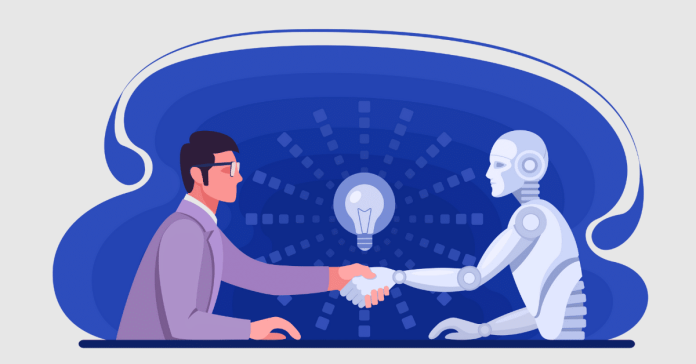
Agentic AI hiring humans is rapidly reshaping how mental health support works, blending machine intelligence with human expertise in ways few expected. What once sounded like a distant concept now appears as a practical model, where AI systems actively recruit human specialists to perform tasks they cannot safely or effectively complete alone.
The rise of AI mental health tools comes from advances in generative AI and large language models. Millions of users now turn to AI platforms for emotional support, advice, and reflection. These tools remain accessible at any time and often cost little or nothing. This convenience explains why AI has become one of the most widely used sources of mental health guidance today. However, AI still lacks emotional depth and the lived experience required to handle complex psychological conditions.
Global institutions continue to highlight shortages in mental health professionals. As a result, AI fills part of that gap, but it does not solve the entire problem. It cannot match the nuanced understanding and ethical judgment of trained therapists. This gap is where agentic AI hiring humans becomes both relevant and necessary.
Agentic AI does more than respond to prompts. It plans, acts, and coordinates tasks independently. Instead of behaving like a passive assistant, it works as an orchestrator. In practical terms, this means AI can assess a user’s needs, decide when additional expertise is required, and recruit a human specialist to step in. The system continues to monitor progress and adjust support as needed, creating a continuous loop of care.
The mechanics of agentic AI hiring humans follow a clear process. The AI identifies the type of expertise required. It then searches for suitable professionals, establishes contact, and arranges the working relationship. Once a human expert joins, the AI monitors progress and maintains oversight until the task ends. In mental health scenarios, this could involve identifying signs of distress, selecting a licensed therapist with relevant expertise, and coordinating ongoing sessions.
Mental health stands out as one of the most compelling applications of this approach because it reveals both the strengths and limits of AI. On one hand, AI offers constant availability, pattern recognition, and immediate responses. On the other hand, it struggles with emotional nuance, ethical complexity, and high-risk situations. By integrating human therapists into the process, agentic AI hiring humans creates a hybrid system that leverages the strengths of both.
This model improves significantly on earlier approaches. Previously, AI systems relied on simple handoffs. When a situation became too complex, the AI transferred the user to a human and stepped away entirely. This approach often created fragmented care, where the human therapist had little context and the AI played no further role. With agentic AI, the system stays involved. It tracks progress, gathers feedback, and supports both the user and the therapist throughout the process.
Consider a workplace example. An employee begins to show signs of burnout through reduced productivity, late-night communications, and negative language patterns. The AI system detects these signals and starts a conversation. If the situation escalates, the AI activates agentic AI hiring humans by selecting a qualified therapist from a pre-approved network. It schedules sessions and continues to monitor both the employee’s progress and the therapist’s input. This approach creates a coordinated support system instead of a disconnected intervention.
The business implications of this model are substantial. Companies now seek proactive mental health solutions. By combining AI monitoring with human expertise, organizations can identify issues early, reduce long-term costs, and improve employee well-being. Employers can partner with therapist networks, allowing AI systems to activate support instantly when needed. This shift moves mental health care from reactive treatment to proactive management.
At the same time, this approach raises important ethical and legal questions. One concern involves control. If AI systems make decisions about when and how to engage human professionals, developers must ensure transparency and accountability. Privacy also remains critical. Systems must handle sensitive mental health data with extreme care to protect users. Another concern involves misuse. Poorly designed systems could assign harmful tasks or make unsafe recommendations.
Experts emphasize that human judgment remains central to effective therapy. This reinforces the idea that AI should support, not replace, human professionals. The success of agentic AI hiring humans depends on maintaining this balance. AI must coordinate and assist, while humans retain authority over care decisions.
This evolving model reflects a broader shift in how technology interacts with society. Instead of replacing human roles, advanced AI systems now reorganize them. In mental health, this creates a collaborative framework where machines and humans work together to deliver better outcomes. The AI provides scale and efficiency, while the human therapist delivers empathy, insight, and ethical judgment.
The future of mental health care may depend on how effectively this collaboration works. Agentic AI hiring humans offers a path toward more accessible and responsive support systems. However, it also requires careful design, strong safeguards, and ongoing oversight. Without these elements, the risks could outweigh the benefits.
Ultimately, this development marks a turning point. AI no longer acts only as a tool that humans use. It now participates in decision-making processes that affect real lives. In mental health care, this shift carries profound implications. If implemented responsibly, agentic AI hiring humans could expand access to care while preserving the essential role of human expertise.

