
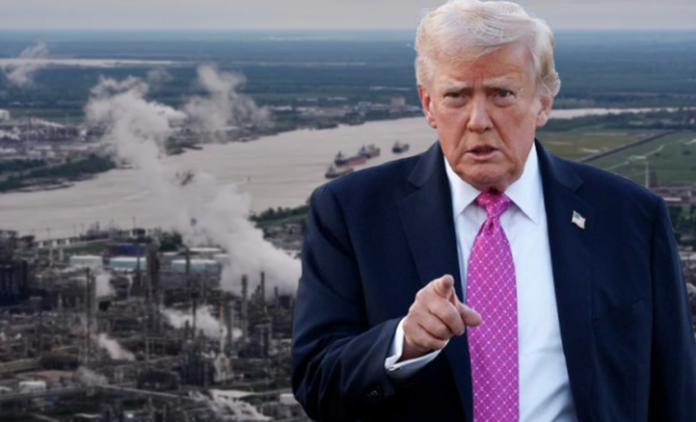
President Donald Trump has rescinded a foundational 2009 scientific determination that classified greenhouse gases as a threat to public health and welfare. The decision dismantles a regulatory pillar that has shaped US climate policy for more than a decade and is expected to ignite a prolonged legal battle.
The original ruling, known as the “endangerment finding,” was issued by the Environmental Protection Agency during Barack Obama’s first year in office. It concluded that six key greenhouse gases, including carbon dioxide and methane, posed dangers to human health. That conclusion became the legal basis for federal rules limiting emissions from vehicles, power plants, oil and gas operations, landfills, and even aircraft.
The White House has framed the reversal as a sweeping deregulatory action aimed at reducing costs for consumers and businesses. Critics argue it represents the most consequential rollback of federal climate policy in modern US history.
The Role of the 2009 Endangerment Finding
The EPA’s 2009 determination followed a Supreme Court ruling that greenhouse gases qualify as pollutants under the Clean Air Act. The agency concluded that rising concentrations of these gases contribute to climate change and therefore endanger public health and welfare.
Because Congress was divided and unable to pass comprehensive climate legislation at the time, the finding became the central legal mechanism for regulating emissions. Federal agencies relied on it to justify fuel economy standards for automobiles, methane controls in oil and gas operations, and carbon limits for power plants.
Legal experts have described the determination as the cornerstone of US climate regulation. Nearly every major federal rule addressing greenhouse gas emissions traces its authority back to that original scientific conclusion.
White House Justifies Deregulation
President Trump characterized the 2009 ruling as harmful to American industry, particularly the automotive sector. In remarks at the White House, he argued that climate regulations built on the finding increased vehicle costs and constrained domestic manufacturing.
Administration officials contend that overturning the determination will lower regulatory burdens on automakers, potentially reducing per-vehicle production costs by thousands of dollars. The White House has estimated that the broader rollback could generate more than $1 trillion in economic savings.
Supporters of the move argue that previous climate rules pushed manufacturing overseas, particularly to countries with less stringent environmental standards. They claim that shifting production abroad undermined US competitiveness without meaningfully reducing global emissions.
Critics Warn of Environmental and Health Impacts
Environmental organizations have responded sharply, warning that the decision weakens federal authority to curb emissions across multiple sectors. They argue that without the endangerment finding, the EPA may lack a clear mandate to regulate greenhouse gases under the Clean Air Act.
Climate advocates also dispute projected cost savings. Some analysts suggest that reducing fuel efficiency standards could lead to higher fuel consumption and increased long-term expenses for consumers. Health impacts are another point of concern. Opponents of the rollback cite research linking higher emissions to respiratory illnesses, cardiovascular disease, and premature mortality.
Former President Barack Obama publicly criticized the decision, stating that removing the scientific determination would leave Americans more vulnerable to climate-related risks.
Impact on the Auto Industry
The automotive sector stands at the center of the policy shift. Vehicle emissions standards have been one of the most visible and consequential applications of the 2009 ruling.
By rescinding the endangerment finding, the administration gains broader latitude to relax fuel economy and emissions rules. While this could reduce short-term compliance costs for manufacturers, it may create strategic complications.
Global markets are increasingly tightening emissions standards. If US regulations diverge significantly from international benchmarks, automakers could face challenges selling less efficient vehicles abroad. Industry analysts note that regulatory alignment often influences product design and long-term investment decisions.
Legal Uncertainty Ahead
The decision is almost certain to face legal challenges. Environmental groups and several state governments are expected to contest the reversal in federal court.
Legal scholars point out that rescinding a scientific determination of this magnitude requires a robust evidentiary basis. Courts may examine whether the administration adequately addressed the scientific findings that supported the original decision.
The previous ruling also influenced the balance of power between federal and state authorities. In some instances, it served as a basis for limiting state-level regulatory initiatives and blocking certain climate-related lawsuits. Its removal could reopen legal pathways for states and private litigants seeking climate accountability.
Broader Climate Policy Implications
The revocation reshapes the framework of US climate governance. For more than a decade, federal climate rules have been anchored in the EPA’s authority under the Clean Air Act. Without the endangerment finding, future administrations may need to pursue alternative legal or legislative strategies to regulate greenhouse gases.
The move also signals a significant shift in US environmental priorities. While some countries are accelerating decarbonization efforts and expanding clean energy investment, the United States is recalibrating its federal regulatory stance.
Observers note that regulatory cycles in US climate policy often fluctuate with changes in political leadership. The long-term durability of the rollback may depend on future electoral outcomes and judicial review.

