
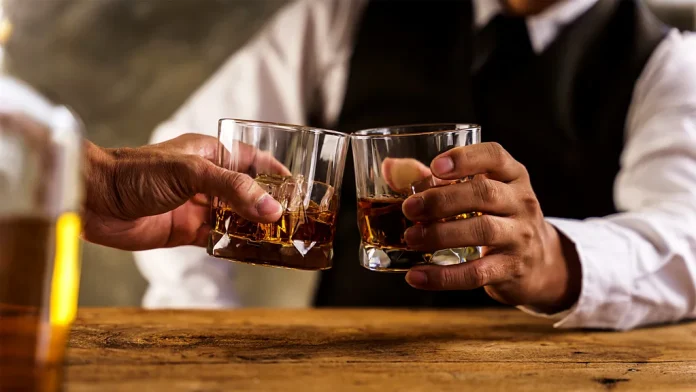
In a groundbreaking move, Saudi Arabia has begun to relax its long-standing ban on alcohol, allowing wealthy foreign residents to legally purchase alcoholic beverages for the first time in 73 years. This development marks a significant departure from the kingdom’s traditional policies, which have long prohibited the sale and consumption of alcohol under Islamic law. The move, which is part of the broader social and economic reforms under Crown Prince Mohammed bin Salman’s leadership, signals Saudi Arabia’s growing openness to global influences, especially in the realm of tourism and international business.
The policy shift is currently limited to foreign residents who meet specific criteria, such as holding a Premium Residency permit or earning a minimum monthly salary. The alcohol is sold in select stores within Riyadh’s Diplomatic Quarter, an upscale area known for housing embassies and affluent expatriates. Although alcohol sales are still not publicly advertised, this discreet testing phase could eventually lead to broader changes, potentially extending alcohol access to tourists in the future.
A Historic Policy Shift
For decades, Saudi Arabia has maintained one of the strictest alcohol bans in the world, adhering to the teachings of Islam, which forbids the consumption of alcohol. However, as part of the country’s Vision 2030 plan, which aims to diversify its economy and reduce its reliance on oil, Saudi Arabia has begun implementing a series of reforms designed to make the kingdom more appealing to foreign investors and tourists.
The changes to the alcohol policy began quietly in 2024 with the opening of a small, unmarked store inside a discreet complex in the Diplomatic Quarter of Riyadh. Initially, access was restricted to non-Muslim diplomats, but by late 2025, the policy expanded to include foreign residents who hold a Premium Residency permit, which costs around 100,000 Saudi riyals ($27,000) per year, or those earning at least 50,000 riyals ($13,000) per month.
These residents are now able to purchase beer, wine, and spirits from the store after presenting their residency ID cards, which include their religion and residency status. Some customers, including expatriates working in Saudi Arabia, have shared their experiences of visiting the store, noting that the process is relatively straightforward once inside, although it can take up to an hour to queue and enter.
Alcohol Consumption in Saudi Arabia: A Complex History
Although alcohol has been officially banned in Saudi Arabia for over seven decades, it has not disappeared entirely from the country. Despite strict laws, alcohol has circulated in private and underground markets for years, often in the form of homemade brews, smuggled goods, or through diplomatic channels. Embassies, for instance, have historically been allowed to import unlimited quantities of alcohol for official use, which has contributed to the availability of alcohol in private settings.
However, the sale of alcohol has remained a highly sensitive issue, and the introduction of the new policy is being handled discreetly, without much public announcement. Analysts believe that the kingdom’s cautious approach reflects its careful balance of modernizing its economy and maintaining its cultural and religious identity.
Sebastian Sons, a senior researcher at the German think tank Carpo, explained that Saudi authorities are taking a measured approach with this policy shift. “They are moving forward with caution, making gradual changes that can be reversed if necessary,” Sons said. “Alcohol is a sensitive issue in Saudi Arabia, and the authorities are aware of the potential backlash from more conservative segments of the population.”
The Economic and Social Context of the Change
This move to allow alcohol sales is part of a broader strategy to attract more foreign investment and tourists to Saudi Arabia. As global energy markets remain volatile and oil revenues decrease, the Saudi government has intensified its efforts to diversify the economy, focusing on non-oil sectors such as tourism, entertainment, and technology. The kingdom is keen to establish itself as a global business hub and a popular destination for international travelers, particularly those from Western countries.
Saudi Arabia’s hospitality sector is already preparing for the possibility that the alcohol policy will be further relaxed. Many hotel groups have started hiring bartenders and staff with knowledge of spirits and beverages in anticipation of a shift that could allow tourists to purchase alcohol. This aligns with Saudi Arabia’s efforts to ramp up its tourism industry, which is a key pillar of Vision 2030. By 2024, the kingdom attracted nearly 30 million international visitors, and it aims to increase that number to 70 million by 2030.
Impact on Tourism and Global Relations
The relaxation of alcohol restrictions also comes as Saudi Arabia continues to expand its global presence, hosting major international events such as the World Expo in 2030 and the FIFA World Cup in 2034. These events are expected to bring millions of international visitors, many of whom come from countries where alcohol is an integral part of social and cultural life. For these visitors, the prospect of being able to consume alcohol legally in Saudi Arabia could make the kingdom a more attractive destination.
In addition to attracting tourists, the new alcohol policy aims to bolster the country’s appeal to foreign professionals and executives. With the introduction of the Premium Residency permit and other economic incentives, Saudi Arabia is positioning itself as an ideal destination for high-income expatriates and global talent. Many of these professionals, accustomed to more liberal lifestyles, may find the new alcohol policy an important factor in their decision to live and work in the kingdom.
The Potential for Future Relaxation
Although the new alcohol policy is currently limited to a small group of wealthy, foreign residents and diplomats, it has sparked speculation about the potential for further relaxation. Some industry insiders believe that the Saudi government is testing the waters with this policy change, with plans to extend alcohol availability to tourists in the near future. While no official announcement has been made, the growing interest in Saudi Arabia’s tourism sector suggests that the country is moving toward a more open approach to leisure and entertainment.
The possibility of allowing alcohol sales to tourists would be a significant shift for Saudi Arabia, which has long maintained a strict stance on alcohol. However, as the country continues to diversify its economy and seek new sources of revenue, the opening of alcohol sales to tourists could become an important step in Saudi Arabia’s ongoing transformation.
Saudi Arabia’s Changing Global Image
The relaxation of alcohol restrictions in Saudi Arabia is not an isolated change. Under Crown Prince Mohammed bin Salman’s leadership, the kingdom has embarked on an ambitious campaign to modernize its social and cultural policies. The lifting of the ban on alcohol, along with the reintroduction of cinemas, the hosting of international music festivals, and the easing of gender-related restrictions, is part of a broader effort to rebrand Saudi Arabia as a modern, progressive society.
As the kingdom continues to open its doors to foreign investment and international visitors, it will likely face ongoing challenges in balancing its cultural and religious traditions with the demands of a rapidly changing global economy. The easing of alcohol restrictions could be just one of many steps in Saudi Arabia’s ongoing transformation as it seeks to establish itself as a major player on the world stage.

