
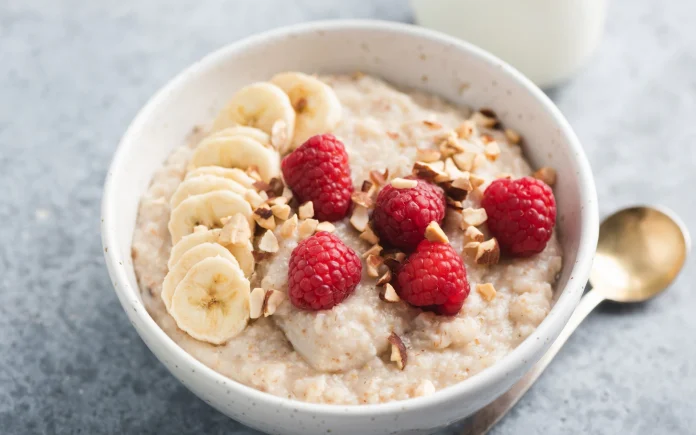
Oats are the ultimate winter breakfast. They’re warm, comforting, filling, and cost just 5p per portion. Moreover, beyond convenience and affordability, oats offer powerful health benefits of oats that make them a true nutritional powerhouse—especially when prepared wisely.
Dr. Emily Prpa, a nutrition scientist and visiting lecturer at King’s College London, confirms their value. “From a nutrition perspective, oats are a great source of complex carbohydrates—the body’s preferred fuel,” she says. “They also support heart health and feed your gut microbiome thanks to their high fibre content.”
To unlock these benefits, choose less processed varieties like steel-cut or whole rolled oats over instant versions. In addition, pair them with smart toppings and consume adequate portions. Below are six science-backed reasons to add oats to your daily routine—and how to boost their impact.
First, oats can lower “bad” LDL cholesterol. This effect comes from beta-glucan, a soluble fibre that forms a gel in the gut. That gel binds to cholesterol-rich bile acids and helps remove them from the body. Consequently, UK and European food authorities agree: consuming 3g of beta-glucan daily reduces heart disease risk. You’d need about 90g of oats to hit that target—more than double the standard 40g serving. However, you can supplement with oat bran or barley. Dr. Prpa suggests topping your bowl with colourful fruits like berries. Their polyphenols enhance heart protection. She adds, “Steel-cut oats have more beta-glucan than rolled oats, but choose what fits your lifestyle—I prefer organic rolled oats for convenience.”
Second, oats support healthy blood sugar levels—when eaten correctly. Plain porridge with honey may cause a glucose spike, but that’s normal in healthy people. The key is balance. “Pair oats with fat, protein, and fibre to slow digestion,” Dr. Prpa advises. For example, try nut butter for healthy fats, yogurt for protein, and fruit for fibre. Less processed oats like rolled varieties also lead to a gentler blood sugar rise because their structure takes longer to break down. As a result, regular oat consumption may even lower type 2 diabetes risk by up to 20%.
Third, oats feed your gut microbiome. Beta-glucan acts as a prebiotic—undigestible fibre that good gut bacteria ferment. This process produces short-chain fatty acids, which reduce inflammation throughout the body, even in the brain. “Your gut microbiome is like an orchestra conductor,” Dr. Prpa explains. “It communicates with nearly every organ.” To amplify this effect, add probiotic-rich yogurt to your oats. It introduces live beneficial bacteria, creating a powerful prebiotic-probiotic combo.
Fourth, oats may help lower blood pressure. One review found that eating 60g of rolled oats daily reduced systolic pressure by 2.7 mmHg and diastolic by 1.5 mmHg. Soluble fibre and minerals like potassium and magnesium drive this benefit. Specifically, potassium relaxes blood vessel walls and flushes excess sodium. Therefore, top your oats with bananas, apricots, nuts, or seeds to boost potassium intake naturally.
Fifth, oats may reduce bowel cancer risk. High-fibre diets—including fibre from whole grains like oats—are linked to significantly lower colorectal cancer rates. In fact, every extra 8g of fibre per day cuts risk further. A 40g serving of rolled oats delivers 3.4g of fibre. Dr. Prpa calls oats “a fantastic, accessible vehicle” for meeting daily fibre goals. To reach 8–10g per meal, boost your bowl with raspberries (3g fibre per 80g), chia seeds (5g per tablespoon), or almonds (3.2g per 30g).
Finally, oats support weight management. A 40g dry portion has just 185 calories—or 300 with semi-skimmed milk. But satiety matters more than calories alone. “A balanced oat bowl keeps you full until lunch,” Dr. Prpa says. For instance, add 80g blueberries (36 cal), two tablespoons Greek yogurt (28 cal), and one tablespoon chia seeds (63 cal) for lasting energy. Furthermore, choose rolled oats over instant—they digest slower, preventing mid-morning hunger crashes.
In summary, the health benefits of oats span heart, gut, metabolic, and long-term disease prevention. With smart preparation, this humble grain becomes a cornerstone of resilient, vibrant health—especially during the colder months. By combining fibre, thoughtful toppings, and consistent intake, you can turn your morning bowl into a powerful tool for lifelong wellness.
READ: How Community Awareness Can Cut Nigeria’s Newborn Deaths in Half

