
A year after the United States began dismantling its foreign aid programs, researchers warn that the consequences are catastrophic. The US aid cuts have already led to an estimated 750,000 preventable deaths—more than half of them children—and could contribute to millions more in the coming years.
The crisis began on January 20, 2025, when President Donald Trump froze humanitarian assistance immediately after his second inauguration. Although officials initially described the freeze as temporary, it quickly escalated. Advised by Elon Musk as part of a sweeping cost-cutting agenda, the administration eliminated 83% of programs run by the US Agency for International Development (USAID)—and then fully dismantled the agency itself.
Consequently, other major donors followed suit. The United Kingdom, France, and Germany all announced deep reductions in their own aid budgets. As a result, humanitarian efforts in the world’s poorest countries faced compounding shortfalls. This is especially alarming because the US previously provided over 40% of all global development aid.
Since then, researchers have worked to model the human toll. While precise data is now scarce, estimates paint a grim picture. According to the Impact Counter website—an analysis by Boston University infectious disease modeler Brooke Nichols, though not yet peer-reviewed—the aid cuts have killed more than 750,000 people so far. That equals roughly 88 deaths every hour.
Moreover, a separate study by the Barcelona Institute for Global Health projects that over 22 million people could die from preventable causes by 2030 due to these funding losses. This research, set to publish in The Lancet Global Health, was first reported by Agence France-Presse in November. Additionally, the US-based Institute for Health Metrics and Evaluation recently warned that 16 million more children under five could die by 2045 if the cuts become permanent.
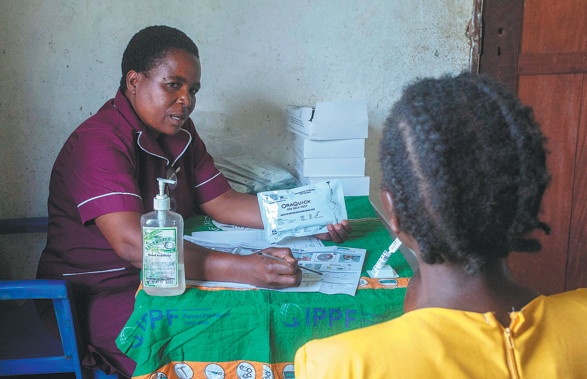
Nowhere is the damage more severe than in the fight against HIV. The United Nations calls the US aid cuts the worst setback in decades for HIV prevention and treatment. Although the Trump administration claims it resumed critical services under PEPFAR—the President’s Emergency Plan for AIDS Relief—many patients in low-income countries have lost access to antiretroviral drugs.
Impact Counter estimates that over 170,000 people, including more than 16,000 infants, have already died due to PEPFAR disruptions. A new survey of 79 community HIV organizations across 47 countries found severe service reductions. In fact, access to PrEP—the drug that prevents HIV transmission—has been cut in half at 80% of these groups.
Beyond HIV, the ripple effects are devastating. Tuberculosis has claimed more than 48,000 lives so far, with projections exceeding 2.2 million by 2030. Meanwhile, over 160,000 children have died from pneumonia, 150,000 from malnutrition, and 125,000 from diarrhea. Malaria alone has killed more than 70,000 people—three-quarters of them children.
Yet the true scale may never be known. After USAID’s collapse, many disease surveillance and death-tracking systems in developing nations “no longer exist,” says Caterina Monti, co-author of the Barcelona study. She explains that global health relies on interconnected systems: a child with diarrhea needs not only medicine but also clean water, sanitation, and health education. “It’s a very complex system—if you cut one piece, the other pieces won’t work,” she said.
Sarah Shaw, advocacy director at MSI Reproductive Choices, compared USAID funding to an iceberg. “The visible part is the money for drugs,” she told AFP. “But underneath, the US paid for transport, warehouses, software, training, and education.” For a year, charities used leftover supplies. “But now all of that is gone,” she added. “Last year we were running on fumes. This year there will be no fumes.”
In short, the US aid cuts have not just reduced funding—they have unraveled the infrastructure that keeps millions alive. Without urgent reversal, experts fear a generational setback in global health progress.
READ: Dutch Health Groups Push for National Cardiovascular Strategy

