
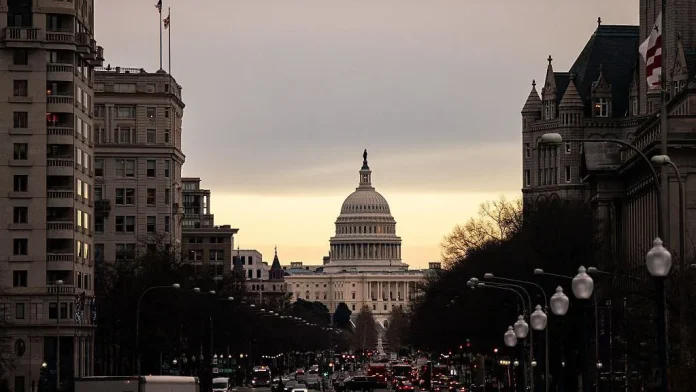
The US House of Representatives has passed legislation to extend healthcare subsidies for millions of Americans, delivering a rare bipartisan moment in a deeply divided Congress. However, despite clearing the lower chamber, the bill faces a difficult path in the Senate, where it lacks the votes needed to become law.
The measure would renew pandemic-era tax credits that help lower monthly health insurance premiums for people enrolled through the Affordable Care Act, also known as Obamacare. These subsidies expired at the end of last year, leading to sharp premium increases for many households and reigniting political debate over healthcare affordability ahead of the November midterm elections.
Bipartisan vote highlights Republican divisions
The bill passed the House by a vote of 230 to 196 after seventeen moderate Republicans joined all Democrats to approve the measure. Their decision directly challenged House Republican leadership, including Speaker Mike Johnson, who opposed renewing the subsidies.
Johnson and other party leaders have argued that the expanded tax credits are vulnerable to fraud and add unnecessary costs to the federal budget. Despite this, a group of centrist Republicans pushed for action, saying inaction would leave millions of constituents facing unaffordable healthcare costs.
The vote was made possible through a procedural maneuver known as a discharge petition, supported by four Republican lawmakers last month. This tactic forced House leadership to allow a vote on the bill, underscoring internal divisions within the Republican caucus.
What the healthcare subsidy extension would do
The legislation would extend the expanded Affordable Care Act subsidies for another three years. These tax credits were originally introduced under the ACA in 2014 and later expanded during the Covid-19 pandemic to make coverage more affordable during the public health crisis.
Roughly 24 million Americans currently purchase health insurance through the ACA marketplace, with a majority relying on subsidies to reduce monthly premiums. Since the expanded credits expired, insurance costs have more than doubled for some 20 million people, according to lawmakers backing the bill.
Supporters argue that extending the subsidies would prevent millions from dropping coverage, reduce financial strain on working families, and stabilize insurance markets. Centrist Republicans backing the bill said an extension, even a temporary one, is preferable to allowing premiums to rise unchecked.
Senate outlook remains uncertain
Despite passing the House, the legislation is unlikely to advance easily in the Senate. The upper chamber is not required to take up the bill and has already rejected a similar proposal. Even if it were brought to the floor, the measure currently falls short of the 60 votes needed to overcome a filibuster.
Senators from both parties have indicated they are working on a separate bipartisan compromise, with draft language expected in the coming weeks. Any Senate deal could differ significantly from the House version, potentially reshaping the scope or duration of the subsidies.
As a result, the House vote is widely viewed as symbolic rather than decisive. Still, it places lawmakers on the record at a time when healthcare costs remain a top concern for voters.
Healthcare becomes a key election issue
The passage of the bill highlights how healthcare affordability is once again emerging as a central political issue. With Americans facing higher insurance premiums, rising living costs, and economic uncertainty, lawmakers are under growing pressure to demonstrate responsiveness.
The vote also represents a setback for House Republican leadership, which holds only a narrow majority. Internal fractures over healthcare policy could complicate legislative strategy as Congress moves deeper into an election year.
Whether through this bill or a separate Senate compromise, the debate over healthcare subsidies is far from over. What is clear is that the future of Affordable Care Act subsidies will play a prominent role in shaping political narratives and policy debates in the months ahead.

