
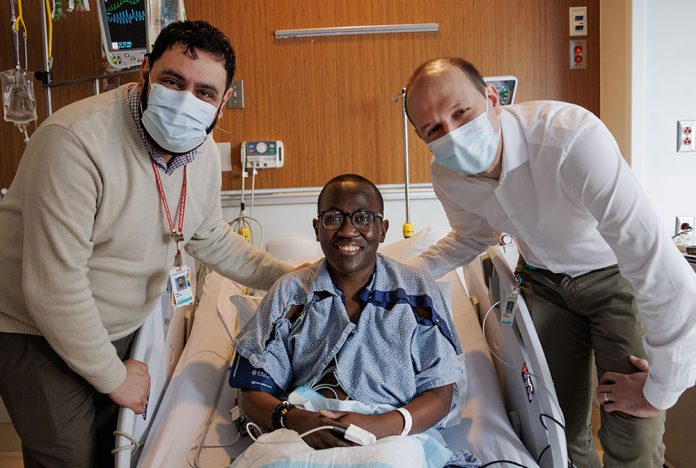
At age 35, Allan Byamukama has finally escaped a lifetime of pain—thanks to sickle cell gene therapy. Diagnosed with sickle cell disease at just five months old, he spent decades shuttling between emergency rooms in Uganda and the United States. Despite multiple treatments—including hip replacement and red blood cell exchange—his condition barely improved.
For the first 25 years of his life, Byamukama managed his illness in Uganda. Then, in 2015, he moved to the U.S. to join family. There, his hematologist introduced him to a groundbreaking option: gene therapy. At the time, it was still experimental. But in December 2023, the U.S. Food and Drug Administration (FDA) approved the treatment. Soon after, Byamukama began the process at Massachusetts General Hospital.
The procedure was intense. First, doctors harvested his own stem cells over three days. Then, scientists edited those cells in the lab—a process that took seven months. After a short round of chemotherapy, they reintroduced the corrected cells into his body. In August 2025, doctors declared him free of sickle cell disease. Since then, he has had zero complications.
Byamukama is now the first Ugandan cured through sickle cell gene therapy. He is also only the 15th person worldwide to receive this FDA-approved treatment. Previously, in 2008, seven-year-old Miriam Mulumba became the first Ugandan cured—but she received a bone marrow transplant. Therefore, Byamukama is the second Ugandan ever cured of the disease.
Speaking from Kampala’s Ministry of Health on Thursday, he could hardly contain his joy. “I once asked God for just one pain-free year before I died,” he said. “But He gave me so much more. I’m deeply grateful.”
However, the treatment came at a staggering cost: $2.1 million (about UGX 7.5 billion). Fortunately, U.S. insurance covered it. “This would have been impossible in Uganda,” he admitted. In March 2025 alone, he had visited the ER 42 times—highlighting the urgent need for accessible care at home.
Byamukama now urges fellow patients not to lose hope. “I thought I wouldn’t live past 18,” he said. “Now I’m 35 and healthy.” He also called on the Ugandan government to expand access to advanced treatments and improve awareness. “In some areas, people still manage sickle cell with just paracetamol,” he stressed.
Evelyne Mwesigwa, Coordinator of the Gene Therapy Initiative at Uganda’s Joint Clinical Research Centre, echoed his appeal. She noted that bone marrow transplants once cost over $1 million—but now run about $30,000. “With scale and local capacity, gene therapy costs can drop too,” she said. “We must train more Ugandan doctors in these techniques.”
The government is already taking steps. Dr. Charles Olaro, Director General of Health Services, confirmed that pre-marital sickle cell testing is free at all public facilities. “Knowing your status before marriage can prevent passing the disease to children,” he said. The ministry also partners with private firms and donors to cut treatment costs.
In October 2025, Health Minister Dr. Jane Ruth Aceng announced another milestone: Ugandan pharmaceutical company Qcil will soon produce hydroxyurea locally. This drug helps reduce complications in sickle cell patients. “Local manufacturing will make treatment more accessible,” Aceng said.
Newborn screening for sickle cell is already free in all government hospitals. Adult tests cost no more than UGX 50,000—even in the private sector.
Ultimately, Byamukama’s story offers both hope and a challenge. While sickle cell gene therapy remains out of reach for most Ugandans today, his cure proves it’s possible. With investment, training, and policy support, such breakthroughs could one day save thousands across Africa.
READ: Make Traffic Light Nutrition Labels Mandatory, Says Which?

